Military History:
World War II in the Air

World War II was the first major aerial war in history. Aircraft fought on every front and played major roles in most battles. Especially in the Pacific, the airplane was king -- the side with better air power was the side that won, period. I have quite a large number of books that are about one facet or another of the air war. Not all of them can be neatly categorized as about one theater or the other; some deal with both.

References about WW2 aircraft General books about the air war The air war in
the ETO
The air war in
the Pacific

Guidebooks and references about aircraft of WW2

These are reference works about aircraft used in the Second World War. They generally include each aircraft's vital statistics (length, height, wingspan, powerplant, range, armament, etc.) and brief production and operations histories, but no details.

AIRCRAFT OF WWII
Wilson, Stewart
c.1998, Aerospace Publications
ISBN: 1-875671-35-8
This is a sort of catalog of aircraft types used in World War II. The information given on each type is pretty basic: a single small black-and-white photograph, manufacturer, name/model, dimensions, performance, armamament, and a short service history. However, the book more than makes up for that by being the most complete single volume I have on the topic. There are entries for just about every type used by any combatant in the war: the USA, Great Britain, Australia, Germany, Italy, Japan, Russia, and even a few from the Eastern European nations which were allied with Germany against the USSR. The aircraft covered include every major model and many prototypes, trainers, and limited-production models.

FIGHTERS AND BOMBERS OF WORLD WAR II*
Munson, Kenneth
c.1969, Blandford Press
ISBN: 0-907408-37-0
A survey of the major warplanes used by all combatants in the Second World War, including fighters, bombers, transport, patrol, and reconnaissance aircraft. For each aircraft, there's a standard three-view drawing (top/bottom view and a left or right profile) colored drawing, basic specifications (length, wingspan, height, engine, armament, crew, range, etc.), and a capsule description of its development and combat history. Every major warplane of every major combatant is reviewed; the only aircraft that this book doesn't cover are experimental ones or low-production ones that didn't have any effect on the war's course.


In 1982, a British publisher released a set of three books about WW2 aircraft. They were reissued in 1989 by a different publisher. Together, they form a very good resource on aircraft of World War II; their only major shortcoming is that Russia and minor combatants aren't included. All three follow the same format. Aircraft are listed in alphabetical order by manufacturer; within each manufacturer's section, individual aircraft are organized by official designation. For each aircraft there's a three-view drawing, a text description of its production and combat history, and often one or more photographs. Combat, transport, scout, reconnaissance, and training aircraft are all covered. Besides being good references, these books are just plain interesting to browse through because they include many aircraft that most other sources omit: prototypes, trainers, gliders, and planes that were used only in rear areas.

AMERICAN AIRCRAFT OF WORLD WAR II, The Concise Guide To
Mondey, David
c.1994, Chartwell Books
ISBN: 0-7858-0147-2
The Hamlyn Guide volume to American aircraft of WW2. Includes just about every American aircraft I'd ever heard of and several that I previously hadn't.

BRITISH AIRCRAFT OF WORLD WAR II, The Hamlyn Concise Guide To
Mondey, David
c.1994, Chartwell Books
ISBN: 0-7858-1362-4
The Hamlyn Guide volume to British aircraft of WW2. As with the American volume, it includes every British aircraft I'd heard of, and several that I hadn't.

AXIS AIRCRAFT OF WORLD WAR II, The Concise Guide To
Mondey, David
c.1984, Aerospace Publishing
ISBN: 1-85152-966-7
The Hamlyn Guide volume to Axis aircraft of WW2. German, Japanese, and Italian aircraft are all included, as well as a few aircraft from Germany's European allies. Particularly interesting are some of the rarer Japanese and Italian aircraft.

Back to top

General books about the air war

These are books that deal with aircraft and/or the air war in general, on all fronts.

CLASH OF WINGS: World War II in the Air
Boyne, Walter J.
c.1994, Simon & Schuster
ISBN: 0-671-79370-5

FLYING FORTS: THE B-17 IN WORLD WAR II*
Caidin, Martin
c.1968, Bantam
ISBN: 0-553-28780-X
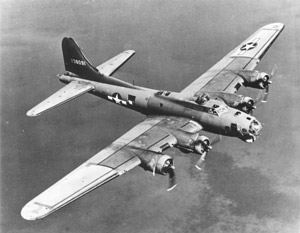
The story of the B-17 Flying Fortress heavy bomber in WW2. The B-17 was the first true heavy bomber, and its combat record is quite amazing. B-17s fought in every theater of the war. They weren't as fast or as high-flying as some other bombers, but they could carry a lot of bombs and take a lot of damage.

FORK-TAILED DEVIL: THE P-38*
Caidin, Martin
c.1973, Ballantine
ISBN: 0-345-28301-5
The story of the P-38 Lightning fighter aircraft, from initial concept through its WW2 combat career. The Lightning served on every front and in an incredible variety of missions: escort fighter, interceptor, night fighter, level bomber, dive bomber, strike fighter, long-range photo reconnaissance. It's credited with the destruction of more Japanese planes than any other Army Air Forces fighter, and gave sterling service in the European and Mediterranean theaters too. Caidin offers an interesting argument that the P-38 had a fundamental effect on US Air Force postwar doctrine: since WW2, the Air Force has always had at least one "do-it-all" tactical fighter-bomber in its inventory.

THE RAGGED, RUGGED WARRIORS*
Caidin, Martin
c.1966, Bantam
ISBN: 0-553-13109-5
A history of air war in the 1930s and the first two years of WW2. Caidin goes into some depth on aspects of the air war often forgotten: the Spanish Civil War, the war between China and Japan, the first use of the Japanese A6M Zero in combat, and more. I found this interesting because Caidin did a good job of showing the "shoestring" nature of the 1930s air wars, and of the entire Japanese air force in China.

THE WAR IN THE AIR: The Royal Air Force in World War II
Lyall, Gavin (ed.)
c.1968, Ballantine Books
ISBN:

WINGS OF THE MORNING: The British Fleet Air Arm in World War 2
Cameron, Ian
c.1962, Wm. Morrow & Co.
ISBN:
The Fleet Air Arm was in charge of all aircraft that operated from Royal Navy warships, including combat planes from aircraft carriers and scout-seaplanes from battleships and cruisers. The Air Arm was badly neglected by the Admiralty between the two World Wars; as a result, when WW2 began it was cursed with obsolete aircraft flying from inferior bases and aircraft carriers. Yet despite these enormous handicaps, the Fleet Air Arm was a powerful force throughout the war and staged several incredibly successful missions.

Back to top

The air war in the European Theater

The air war in Europe was mainly the German Air Force, the Luftwaffe, versus the British, American, and Russian air forces. Both sides fought with large numbers of highly advanced aircraft, and both sides took immense losses.

ACES AGAINST GERMANY: The American Aces Speak
Hammel, Eric
c.1993, Pocket Books
ISBN: 0-671-52907-2
A collection of combat accounts by American fighter aces of the Eighth, Twelfth, and Fifteenth air forces, who fought against the German and Italian air forces in Europe and the Mediterranean theaters.

BLACK THURSDAY*
Caidin, Martin
c.1960, Ballantine
ISBN:
The story of the Schweinfurt raid, October 14, 1943, the worst single day in the history of the Eighth Air Force. The objective of the raid was to knock out the Schweinfurt ball-bearing factories. The cost was horrible: in a single day, sixty bombers and six hundred men died; another fifty bombers came home damaged beyond repair and never flew again; and hundreds more men were killed or injured among those that did return.

THE DAM BUSTERS*
Brickhill, Paul
c.1951, Bantam
ISBN: 0-553-12571-0
In summer 1943 the Royal Air Force planned an exceptionally daring air strike against some very special targets: gigantic earthen dams on two of Germany's largest rivers. The single most specialized mission of the air war, the dambuster raid required special custom-built bombs, carried by specially modified Lancasters flown by carefully trained crews, and dropped from an insanely low altitude, lower even than conventional torpedo-bombers used.

THE FIRST AND THE LAST
Galland, Adolf
c.1954, Bantam
ISBN: 0-553-26726-4
Adolf Galland flew fighters for the Luftwaffe throughout the war, starting as a squadron commander and ending as Commanding General of the Luftwaffe's Fighter Arm. This is his firsthand account of the war as he saw it. Though he fought to defend a murderous regime and was on the losing side, it's hard to read his story without feeling some sympathy for him. He was never a Nazi; on the contrary, he was a soldier who wanted to defend his country, put in an impossible position by the madmen who led Germany to ruin.

FLY FOR YOUR LIFE*
Forrester, Larry
c.1973, Bantam
ISBN: 0-553-20391-6
A combat biography of Robert Roland Stanford Tuck, one of the R.A.F.'s greatest WW2 aces. An expert pilot and lethally accurate gunner, Tuck flew in combat for almost two years, from Dunkirk in 1940 until he was shot down and captured in January 1942. He's officially credited with 29 kills. His private, unofficial tally is 35. He flew both Spitfires and Hurricanes in combat, but always preferred the Spitfire. He became a leader in innovative tactics, including fighter sweeps and low-level strafing strikes.

A HISTORY OF THE LUFTWAFFE *
Killen, John
c.1967, Bantam
ISBN: 0-553-26275-0
This is exactly what the title says: a general history of the Luftwaffe, the German Air Force, from its re-creation in the 1930s through the end of WW2.

HORRIDO!*
Larry Toliver and Trevor Constable
c.1977, Bantam
ISBN: 0-553-23052-2
Horrido! was the victory cry used by Luftwaffe fighter aces when they scored a kill. This book is the story of the Luftwaffe's fighter arm in WW2. It includes general looks at the fighter wars on both the Eastern and Western Fronts, a couple of chapters on night-fighters. It also has separate chapters that focus on some of the greatest German fighter pilots: Adolf Galland (General of the Luftwaffe Fighter Arm), Erich Hartmann (the greatest ace of all time, with 352 kills), Hans-Joachim Marseille (over a hundred kills including seventeen in a single day), Werner Moelders, and many others.

I FLEW FOR THE FUHRER
Knoke, Heinz
c.1954, Bantam Books
ISBN: 0-553-12668-7
Heinz Knoke flew in the Luftwaffe throughout the war as a regular fighter pilot, flying Bf-109s on the Western Front. This book is literally his diary of the war years: a description of his experiences day by day throughout the war.

JG 26: TOP GUNS OF THE LUFTWAFFE
Caldwell, Donald L.
c.1991, Ivy Books
ISBN: 0-8041-1050-6
Combat journal/history of Jagdgeschwader 26, the "Abbeville Kids," the best of the German fighter units on the Western Front in WW2. JG-26's fighters with their signature yellow propeller hubs were familiar sights to American bombers and fighters flying the daylight raids over Germany in 1943 and 1944.

NIGHT FIGHTER
CF Rawnsley & Robert Wright
c.1957, Ballantine
ISBN: 0-345-31025-X
First-hand account of the development of the RAF's night-fighter forces during the Second World War. C. F. Rawnsley was the gunner and radarman for pilot John Cunningham, the best of the British night-fighter aces, so he flew with the best and was there for all the important developments in the night fighters' war.

SCREAMING EAGLE: Memoirs of a B-17 Group Commander
Smith, Maj. Gen. Dale O.
c.1990, Dell
ISBN: 0-440-20847-5
In 1943, Dale Smith was assigned to command of the 384th Bomb Group, a heavy-bomber group in the Eighth Air Force with a very poor record. This is his personal account of how he took over the Group, wrung it out, fixed its problems, and turned it into a successful part of the Eighth Air Force's bomber offensive against Germany.

STUKA PILOT*
Rudel, Hans Ulrich
c.1979, Bantam
ISBN: 0-553-12304-1
Hans Rudel was the greatest of Germany's Stuka dive-bomber pilots, and also the greatest tank-killer "ace" in the Luftwaffe. He fought through the entire war on the Eastern Front, and became the most decorated pilot in the entire Luftwaffe.

THUNDERBOLT!
Johnson, Robert
c.1959, Ballantine
ISBN: 0-345-28307-4
Robert Johnson's personal account of aerial combat in the European Theater, as a member of the 56th Fighter Group ("Zemke's Wolfpack"), flying the P-47 Thunderbolt. Johnson describes his progress from pilot trainee, through the vicious air battles of 1943 and early 1944, to his last mission, on which he became the first USAAF fighter pilot to break Eddie Rickenbacker's WW1 record of twenty-six confirmed air-to-air kills. Official reviews of Johnson's mission reports eventually credited him with twenty-eight kills, placing him among the leading American aces on all fronts.

Back to top

The air war in the Pacific

These books deal with the air war in the Pacific Theater. The Pacific war was just as different from the ETO in the air as it was on the ground and at sea. In the Pacific, aircraft required range above all. The Japanese Empire had limited manufacturing capabilities, while the British and the US Army Air Force poured the majority of their aircraft into the European War. At sea, the Pacific war was in large part a carrier war, which brought lightweight carrier-based aircraft into conflict with larger, heavier land-based aircraft. Further, the Japanese air forces were qualitatively inferior in most ways -- of all their aircraft, only the famous Zero was clearly superior to the aircraft it faced, and even that held only for the first two years of the war. Thus, where the ETO had huge fleets of aircraft in massive air battles, the Pacific Theater had fewer aircraft fighting much smaller battles over longer ranges for much more limited objectives.

ACE! A Marine Night-Fighter Pilot In World War II
Porter, R. Bruce, Col
c.1985, Jove
ISBN: 0-515-09159-6
Bruce Porter joined the Marine Corps in 1940 and trained as a fighter pilot. During the war he became one of a handful of pilots to fly the radar-equipped night fighter version of the F6F. This is his account of his training and wartime experiences.

ACES AGAINST JAPAN: The American Aces Speak
Hammel, Eric
c.1992, Pocket Books
ISBN: 0-671-52908-0
A collection of combat accounts by Air Force, Navy, and Marine pilots who fought against the Japanese in the Pacific Theater.

BAA BAA BLACK SHEEP
Boyington, Gregory
c.1958, Bantam
ISBN: 0-553-10790-9
Gregory "Pappy" Boyington was famous during WW2 as the "bad boy" or "black sheep" of the Marines' flying units. This book is his personal combat journal, from flying with the Flying Tigers up through his imprisonment and postwar experiences.

THE CACTUS AIR FORCE
Miller, Thomas G.
c.1969, Bantam
ISBN: 0-553-26727-2
The story of the Cactus Air Force, the small Marine air group that flew from and defended Henderson Field on Guadalcanal during the critical period of the battle for the island. It's an amazing story: with inferior aircraft, almost no supplies or support, flying from an airfield that was barely more than a strip of dirt, the Cactus fighter and bomber pilots broke the back of the Japanese air forces in the South Pacific and played a critical role in winning the Guadalcanal Campaign.

THE DIVINE WIND
Inoguchi and Nakajima
c.1958, Bantam Books
ISBN: 0-553-25238-0
In late 1944 the Japanese high command concluded that their poorly-trained pilots could no longer be counted on to effectively attack American warships. So they organized the Kamikaze Tokubetsu Kogekitai, the Kamikaze Special Attack Corps. Its mission: to turn Japanese aircraft into piloted missiles, making suicidal crashes into their targets. The kamikaze was a very effective weapon, sinking almost thirty American ships and damaging hundreds. This book tells the story of the kamikazes.

FIRE IN THE SKY: The Air War in the South Pacific
Bergerud, Eric
c.2000, Westview Press
ISBN: 0-8133-2985-X
Companion volume to TOUCHED WITH FIRE, Bergerud's book about the land war in the South Pacific. This book deals with the air war in the same theater, in good detail.

FLIGHTS OF PASSAGE: Recollections of a World War II Aviator
Hynes, Samuel
c.1988, Pocket Books
ISBN: 0-671-67410-2
Most of the airmen who wrote personal accounts were fighter pilots. Sam Hynes is an exception: he was a Marine bomber pilot, flying TBM Avenger level bombers and SB2C Helldiver dive bombers.

GET YAMAMOTO
Davis, Burke
c.1969, Random House
ISBN:
The story of the special "commando" type mission in April 1943 that succeeded in intercepting and shooting down Admiral Isoroku Yamamoto, the Commander in Chief of the Japanese Combined Fleet.

HELL IN THE HEAVENS
Foster, John M.
c.1961, Charter Books
ISBN:
John Foster was a fighter pilot in Marine Fighter Squadron VMF-222, the Flying Deuces. He saw combat in the Solomons and New Guinea areas during 1942 and 1943.

SAMURAI!
Sakai, Saburo
c.1957, Bantam
ISBN: 0-553-11035-7
The story of Saburo Sakai, Japan's greatest surviving fighter pilot. Sakai scored sixty kills in two years as a fighter pilot prior to the invasion of Guadalcanal. There he was severely wounded, nearly killed, and put out of action for two years. He finally returned to flying in the waning days of WW2, and scored four more kills to run his total to 64.

ZERO!
Masatake Okumiya and Jiro Horikoshi with Martin Caidin
c.1956, Ballantine
ISBN: 0-345-28305-8
The Mitsubishi A6M Reisen (Zero) fighter was the mainstay of the Japanese Navy's air arm throughout World War 2. A terror when the war began, the Zero was outdated long before the war ended. Yet it's a mark of the airplane's quality that even in 1945, a well-flown Zero could be lethal against the best fighters the US had. This is its story, as written by Japanese naval officer Masatake Okumiya and engineer Jiro Horikoshi. Because the Zero was representative of the whole Japanese Naval Air Force, the book also becomes a study of the JNAF's war effort and how and why it was defeated. Translated to English by Martin Caidin.

Back to top

Back to Worlds of History