Wrap-up |
So there you have it: a few examples of the many colors of the Herring Gull, from fledgling to adult. By now you should have some idea of why even expert birders consider immature gulls to be such a tough subject.
My thanks to Bill Clark of the Appledore Gull Banding Project, and to fellow (and better) birders JoAnn O'Shaughnessy, Len Medlock, Steve Mirick, and Becky Suomala, for reviewing this photo-essay and suggesting several improvements. Any remaining errors are, of course, mine. I must also thank the hard-working crew of the Appledore Gull Banding Project, who banded all the gulls shown here. Without their work, this photo-essay would have been impossible. If you wish to thank them, then please support their work by keeping an eye out for banded gulls (and other birds), and reporting them to the Bird Banding Laboratory at Patuxent Wildlife Research Center. Appledore gulls can also be reported directly to the Gull Banding Project via their website. You can recognize an Appledore gull by the species and the band pattern: all Appledore Herring Gulls have a green band with white text in the pattern letter-number-number (K30) or number-number-letter (55C). Appledore-banded Great Black-backed Gulls have a black band with white text, in the pattern number-letter-number (5X4).
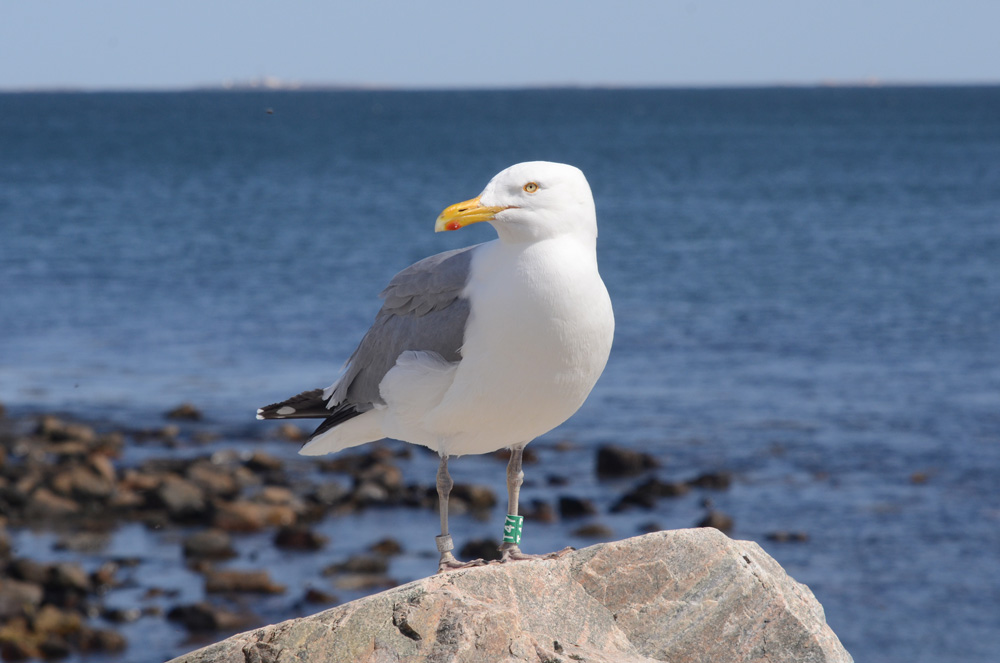
I should also thank one other entity: Herring Gull T47, whose striking spring colors caught my eye one April day in 2012, and who was tolerant enough to pose for a number of pictures. T47 was the first banded gull I ever reported; without it, this essay would never have happened.